Pothole repairs
Pothole repairs, assessed properly before we start
A single pothole can often be cut out and repaired cleanly. But whether that's the right fix depends on what's going on around it. Here's how we think it through — in plain English.
One pothole
An isolated pothole with sound tarmac around it is often a good candidate for a localised repair — cut back to a clean edge, prepared and filled so the patch bonds and drains properly.
- The defect is localised, not part of widespread cracking
- The surrounding surface is stable and not moving under load
- Drainage in the area is working and water isn't pooling
Several defects
A few potholes close together, or a pothole surrounded by cracking, can be a sign that the surface or base is failing more widely. A patch over the worst spot may only delay the next one.
- Widespread or "alligator" cracking around the defect
- Movement, rutting or sinking under traffic
- Recurring potholes in the same area
Suitability always needs assessing on site. We won't talk you into a patch that won't last — and we'll tell you plainly if the surrounding surface needs a closer look.
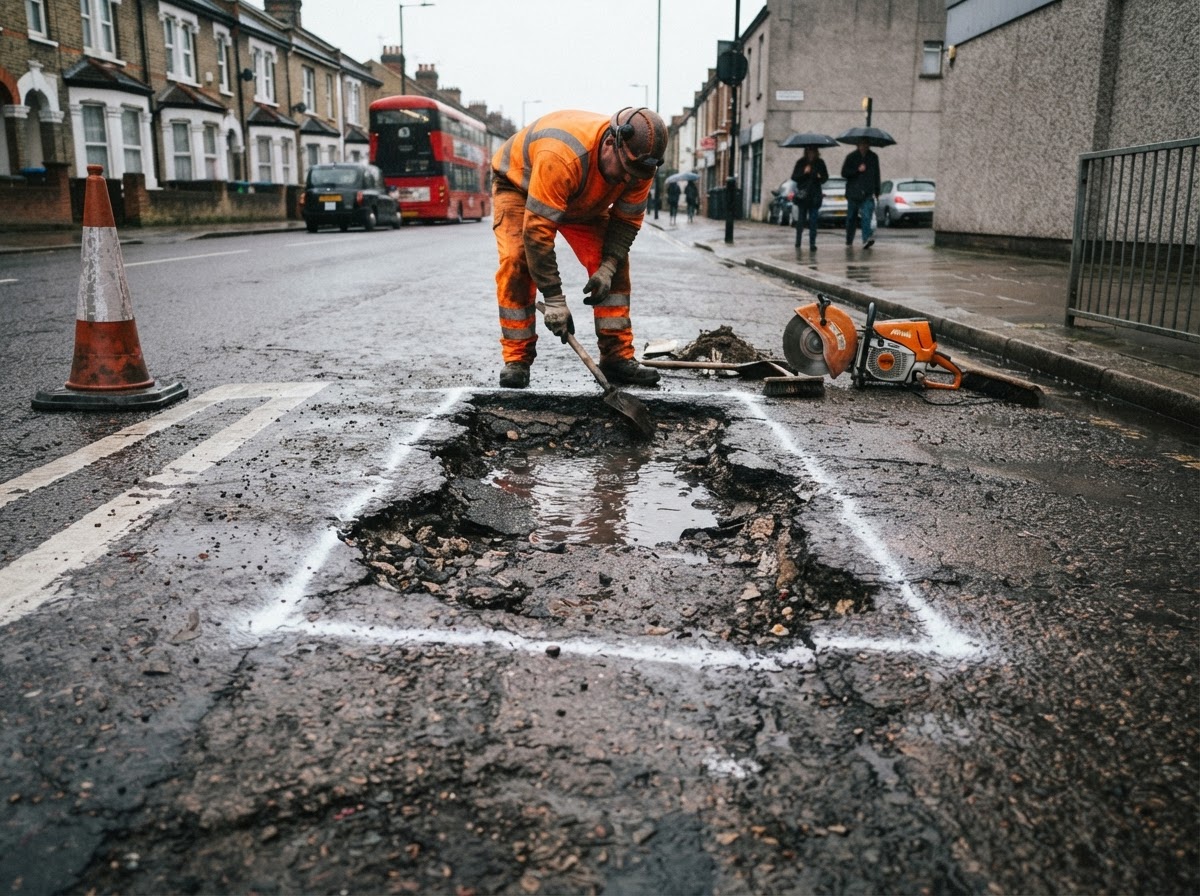
How we decide
We look at the defect itself, the surface around it, the falls and the drainage, then weigh up whether a localised repair will hold or whether the underlying base needs attention first.
Curious how that feeds into price? Our cost guide explains what drives the difference.
Got a pothole that needs sorting?
Send us the site postcode, a short description and a couple of photos. We'll tell you whether a localised repair will hold or whether the surface needs more attention.